Backpack
A Clean, Friendly Shape That Says “Ready for Learning”
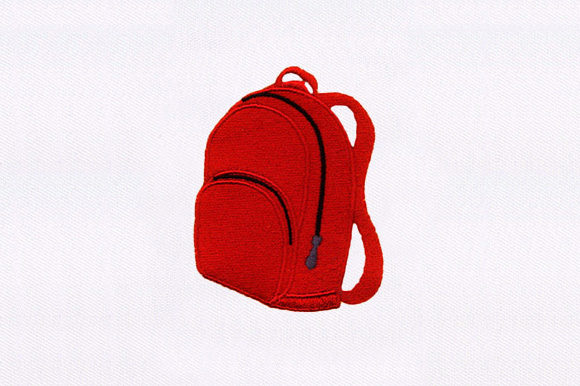
First glance at Backpack — and I immediately picture a well-loved tote bag hanging from a child’s shoulder on the first day of school. It’s not overly detailed or cartoonish; it’s balanced, friendly, and quietly confident. The silhouette is instantly recognizable: rounded top, subtle strap curves, a soft front pocket shape, and just enough interior line work to suggest depth without clutter. There’s no text, no mascot, no seasonal gimmick — which makes Backpack unusually versatile. It reads as both modern and timeless, fitting seamlessly into a boutique nursery line, a small-batch apparel shop, or even a minimalist teacher appreciation gift.
Where It Shines in Real Projects
I tested Backpack across five real-use scenarios: a cotton twill tote bag (for back-to-school teacher gifts), a midweight unisex sweatshirt (for a local after-school program), a 100% cotton baby onesie (as part of a nursery-themed set), a woven patch sewn onto a denim apron (for a craft fair booth), and a linen tea towel (for holiday gifting). In every case, the design held up — not because it’s flashy, but because its proportions and stitch rhythm are thoughtfully calibrated.
- Tote bags & sweatshirts: The clean outer contour and moderate fill-stitch density made it stitch quickly and lie flat — no puckering, even on brushed fleece.
- Baby onesies: At 3.5" wide (a common size in the file set), it scaled beautifully on the chest — large enough to read, small enough to avoid overwhelming delicate fabric.
- Patches & aprons: When stitched with a tight satin stitch border and medium-density fill, it cut cleanly and held its shape through iron-on backing and machine washing.
- Tea towels & pillow covers: The open negative space inside the backpack shape allowed the fabric texture to show through — giving handmade warmth without sacrificing clarity.
Where to Pause — Not Problems, Just Practical Checks
Backpack isn’t demanding, but it does ask for thoughtful execution. On textured fabrics like terry cloth or heavy canvas, the subtle interior lines can soften — so I recommend simplifying those elements in your editing software if needed. On stretchy knits (think lightweight tees), use a light tear-away + cut-away combo stabilizer — the strap curves rely on consistent tension to stay smooth. And while the design avoids tiny lettering or micro-details, the front pocket edge *does* taper finely — test that area on scrap fabric first, especially if you’re using high-sheen thread or dark-on-dark combinations.
It also behaves differently on dark vs. light backgrounds. On black fabric, the inner fill stitches benefit from a slightly higher contrast thread (e.g., charcoal gray instead of navy) to preserve definition. On pale linens or oatmeals, a matte ecru or soft sage keeps it grounded and artisanal — not sterile.
What It Adds to Your Finished Product — Beyond Stitching
This is where Backpack quietly earns its place in your design library. It doesn’t shout — it invites. Customers notice it in person: the gentle curve of the strap, the slight lift of the flap, the way it sits comfortably on a garment without pulling or bulging. That translates directly to perceived value. A customer buying a personalized embroidered tote with Backpack doesn’t just see “a school design” — they see care, intention, and quiet craftsmanship.
For Etsy sellers and small shop owners, that matters. It supports brand consistency without locking you into one niche — pair it with botanical motifs for a nature-based learning line, or layer it subtly behind monogrammed initials for custom graduation gifts. It works equally well as a standalone embroidery file for digital product sellers and as a core motif in printable mockups for social media listings. And because it’s neutral in tone, it avoids dating quickly — unlike trend-heavy graphics, Backpack stays relevant across multiple school years and seasonal launches.
Designer Notes You’ll Actually Use
Before stitching your first Backpack project, do these six things:
- Test on scrap fabric — especially if you’re using a new stabilizer combo or unusual thread weight.
- Check thread color contrast in natural light — what looks distinct on screen may blend on fabric.
- Review stitch density in your embroidery software. If you plan to use it on delicate baby items, consider reducing density by 5–8% in the fill areas.
- Confirm hoop size compatibility — this design likely fits standard 4x4 and 5x7 hoops, but verify before hooping expensive garments.
- Inspect small details at 200% zoom in your editing software — particularly the pocket seam and strap attachment points.
- Run black-and-white mockups alongside full-color versions — many buyers browse in grayscale mode or print catalogs, and Backpack must hold its shape without color cues.
And one final note: since this is a machine embroidery design with broad format support (ART, DST, PES, VP3, and more), double-check licensing terms before offering finished embroidered items for resale or bundling the embroidery file in digital kits. Clarity here protects your craft business long term.
Not Just Back To School — But Thoughtful Making, Year After Year
I keep returning to Backpack because it reflects how I want my own work to land: simple but intentional, functional but expressive, professional but warm. It doesn’t try to be everything — and that’s why it works so well as a custom apparel motif, an embroidered patch, a tote bag design, or a quiet accent on a holiday embroidery piece. For makers who value clarity over clutter, and substance over sparkle, Backpack isn’t just another digital embroidery file. It’s a reliable, human-centered tool — ready when your next handmade product or personalized gift needs honest, unhurried charm.