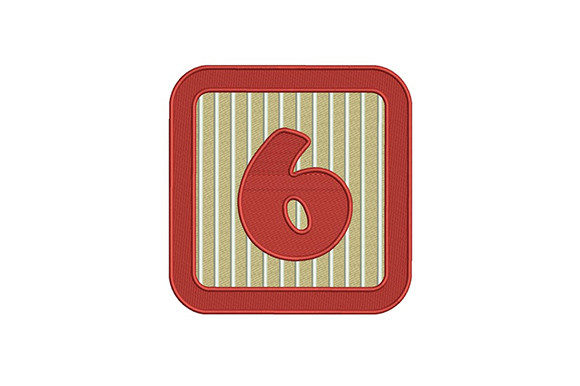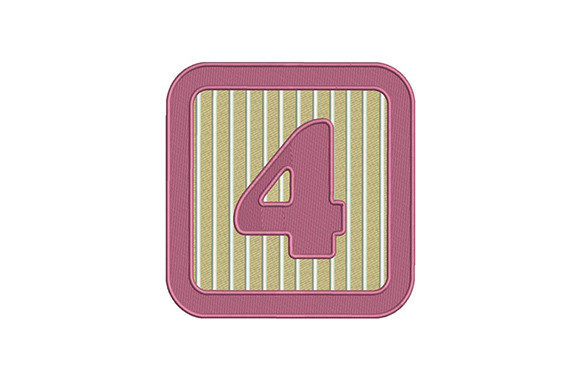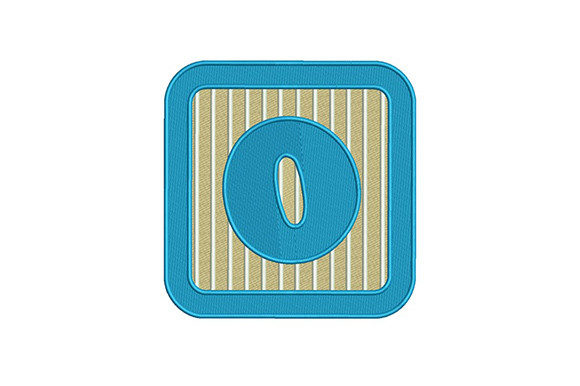
Number 0 Charm: A Quietly Confident Embroidery Staple
As someone who’s stitched hundreds of designs across apparel, nursery goods, and boutique merchandise—most recently a batch of custom “First Day of Kindergarten” tote bags—I opened Number 0 Charm expecting simplicity. What I found wasn’t just minimal—it was intentionally uncluttered, quietly expressive, and surprisingly versatile in practice.
A Design That Breathes on Fabric
The first thing that stands out is how Number 0 Charm avoids visual noise. It’s not cutesy, not overly rounded, not dripping with bows or glitter stitches. Instead, it uses clean curves, balanced proportions, and subtle weight distribution—like a well-designed typeface translated into thread. There’s no applique design layered beneath it, no dense fill stitch overwhelming the shape, and no tiny interior details that vanish at 2.5 inches wide. That makes it feel less like decoration and more like *identity*—a quiet anchor for a child’s name, a birth year, or a classroom number.
I tested it on a soft cotton twill tote bag alongside “Class of 2030” lettering. The contrast worked because Number 0 Charm didn’t compete—it complemented. It held its own without shouting. That’s rare in children’s embroidery, where so many designs default to exaggerated whimsy. This one feels grounded, thoughtful, and agelessly appropriate—from baby onesies to teacher appreciation gifts.
Where It Shines (and Where It Asks for Care)
Number 0 Charm performs beautifully on stable, medium-weight fabrics: cotton canvas for tote bags, brushed poly-cotton for sweatshirts, linen-blend tea towels, and quilting cotton for nursery pillows. Its moderate stitch density means it lies flat, resists puckering, and holds up through repeated washing—critical for baby embroidery or holiday embroidery meant to last years.
It’s especially effective as a standalone embroidered patch or as part of a small cluster (say, paired with a tiny apple or pencil icon) on aprons or caps. On curved surfaces like structured caps, I resized it to 1.75" tall and used medium tear-away stabilizer—no distortion, no skipped stitches.
But—and this matters for craft business owners and Etsy sellers—Number 0 Charm needs thoughtful placement on tricky substrates. On thin jersey t-shirts, I added cutaway stabilizer behind the hoop and reduced top tension slightly to prevent shadowing. On dark fabric, I confirmed the satin stitch outline had enough contrast (a warm cream thread popped nicely against navy). And on textured fabrics like terry cloth kitchen towels, I avoided stitching directly over thick loops—opting instead for smoother sections near the hem.
Real Impact on Your Handmade Product
What surprised me most was how Number 0 Charm elevated perceived value—not by adding complexity, but by removing doubt. Customers scanning your Etsy shop or boutique shelf don’t pause to analyze stitch count. They sense clarity. They trust clean lines. They associate restraint with intentionality. That translates directly to higher engagement, fewer returns, and repeat buyers who say, “Your stuff just *feels* made well.”
For personalized gifts—like a “0–3 Months” baby blanket or a “Back To School” pillow cover—the design reads instantly. No squinting. No decoding. Just warmth, precision, and quiet confidence. That kind of readability builds brand consistency across your digital embroidery file library and finished product line.
Practical Designer Notes Before You Stitch
Before using Number 0 Charm in client work or inventory production, here’s what I always do:
- Test on scrap fabric—especially if you’re using it on stretchy fabric or layered garments like hoodies.
- Check thread color contrast in natural light and under store lighting; some pale pastels disappear on ecru linen.
- Review stitch density visually in your embroidery software—look for any unintended gaps or over-stitched zones near the curve junctions.
- Confirm hoop size compatibility; while it’s simple, very small versions may push minimum digitizing thresholds on compact hoops.
- Inspect small details at 200% zoom—even subtle rounding can affect legibility at under 1.5".
- Test in black-and-white mockups to assess silhouette strength before committing to color palettes.
- Compare performance on light vs. dark fabric backgrounds—not just for visibility, but for how the stitch texture interacts with base color.
- Use proper stabilizer: medium cutaway for knits, tear-away for stable wovens, and fusible + tear-away for lightweight linens.
- Verify licensing before selling finished items or bundling Number 0 Charm into digital product previews—it’s essential for commercial embroidery and small shop product integrity.
More Than a Number—A Design Decision
Number 0 Charm isn’t flashy. It won’t trend on Pinterest overnight. But in the quiet rhythm of real embroidery work—in the hum of your machine, the pile of finished totes, the thank-you note from a parent who loved their child’s “0 Days Until Summer” cap—it earns its place. It supports storytelling without stealing the scene. It scales gracefully from a 1" tag to a 4" focal point on a quilt block. And it fits naturally into the Back To School season not as a gimmick, but as a gentle, human marker of transition.
If you’re curating design assets for your craft business, building an Etsy seller portfolio, or prepping for a holiday craft fair, treat Number 0 Charm like a trusted neutral in your wardrobe: understated, reliable, and quietly powerful when paired with intention.