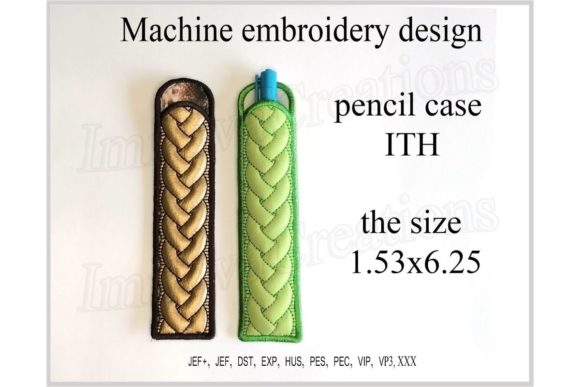
Pencil Case in the Hoop
A Thoughtful, Playful Design That Fits Real-Life Embroidery Work
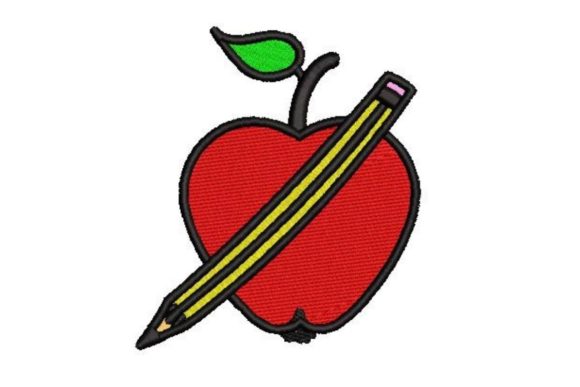
As an embroidery designer who’s shipped over 2,000 custom orders—from nursery quilts to boutique apron collections—I approached Pencil Case in the Hoop with both curiosity and caution. It’s not just another Back To School motif; it carries a gentle, hand-drawn charm—soft curves, balanced negative space, and subtle dimension that reads as “made with care,” not mass-produced. The design leans into friendly minimalism: no excessive detail, no fragile micro-stitching, and just enough personality to feel like a signature piece rather than filler.
Where This Embroidery File Naturally Shines
Pencil Case in the Hoop isn’t built for bold statement sweatshirts or oversized tote bag centers—it excels where intimacy and intention matter. Think embroidered patches sewn onto denim backpacks, front-panel accents on cotton drawstring pencil rolls, or delicate applique additions to baby blankets and linen pillow covers. Its scale and rhythm suit small-to-medium hoop sizes, making it ideal for home-based embroiderers using 4x4” or 5x7” hoops without needing rehooping mid-design.
I tested it on a lightweight cotton twill apron (a popular craft fair item), and the result held up beautifully: clean satin stitch borders defined the shape, fill stitches laid flat without puffing, and the running stitch “zipper pull” detail stayed crisp—even after two gentle machine washes. That kind of durability matters when you’re selling handmade products customers trust for daily use.
Performance Across Fabric Types & Use Cases
- Stretchy fabric: Works well on stable knits (like medium-weight cotton lycra) when paired with light cutaway stabilizer—no puckering, even around curved edges.
- Dark fabric: The design’s open layout and moderate stitch density allow thread color contrast to shine. I used bright lime green thread on navy canvas—readable, cheerful, and photo-ready.
- Curved surfaces (caps, mugs, curved patches): While not intended for full cap fronts, it adapts cleanly to structured cap brims or side panels when resized thoughtfully—just avoid pushing below 85% scale.
- Frequent-wash items (kitchen towels, baby items): No dense satin fill traps lint or wears thin. Stitch paths are logical and layered intentionally—not stacked unnecessarily—so laundering doesn’t compromise definition.
Commercial Use Considerations for Sellers & Studios
If you list on Etsy or supply local boutiques, Pencil Case in the Hoop supports brand consistency without demanding heavy customization. Its multiple sizes mean you can offer matching sets—a 3” version for toddler lunchboxes, a 4.5” for teen backpacks, and a 2.75” variant for embroidered iron-on patches. That flexibility lets you bundle products (e.g., “Back To School Patch Pack”) without juggling ten unrelated designs.
It also translates smoothly into printable mockups. Because the composition is self-contained and balanced, it drops cleanly into lifestyle photos—think a stitched pencil case resting beside crayons on a sunlit desk or nestled in a woven basket. That visual cohesion boosts perceived value and helps buyers imagine gifting it, especially for personalized gifts tied to school milestones.
What to Check Before You Stitch
This isn’t a “load-and-go” file—you’ll want to verify a few things before committing thread and time:
- Confirm hoop size compatibility: Since the listing notes “will come in multiple sizes,” cross-check which versions match your most-used hoops. Don’t assume the smallest is automatically 4x4”—verify dimensions in the file details.
- Review stitch density: Even with moderate fills, some versions may layer satin + fill + outline. Run a quick density check in your embroidery software—if it exceeds 12,000 stitches for the 4” version, consider lightening underlay or simplifying optional elements.
- Test on scrap fabric first: Especially for textured weaves (like linen blends or terry cloth) or dark fabrics—thread sheen and stabilizer show-through vary more than expected.
- Inspect small details post-stitch: The “pencil tip” and zipper teeth are charming but tiny. On low-thread-count cotton, they may soften slightly—opt for high-sheen polyester thread if sharpness is critical.
- Check licensing on Creative Fabrica: As with any digital embroidery file, confirm commercial use terms before listing finished products. Some embroidery files permit unlimited physical sales but restrict resale of the digital file itself.
Design Assets That Support Your Workflow—Not Slow It Down
What makes Pencil Case in the Hoop stand out isn’t novelty—it’s reliability. It avoids common pitfalls: no floating elements that snag during hooping, no nested layers that confuse multi-needle machines, and no reliance on specialty threads or techniques. It uses standard satin, fill, and running stitch types—so it integrates cleanly into existing workflows whether you’re digitizing alongside it or stitching solo.
For creative entrepreneurs building a cohesive product line, this embroidery file serves as a quiet anchor—supporting seasonal collections (Back To School, Teacher Appreciation, Graduation) without requiring redesign. Pair it with coordinating monogram files or simple border motifs, and you’ve got a scalable system—not just a one-off download.
Final Thoughts for Embroidery Designers & Small Business Owners
Pencil Case in the Hoop won’t replace your go-to floral wreath or bold typography file—but it fills a thoughtful niche: approachable, kid-friendly, and commercially versatile without sacrificing craftsmanship. It’s the kind of machine embroidery design that earns repeat orders because it looks handmade, feels durable, and photographs beautifully. If your audience values authenticity over flash, and clarity over clutter, this is a smart addition to your design assets library.
Just remember: always test, always stabilize appropriately, and always let the design guide your fabric and thread choices—not the other way around. When you do, Pencil Case in the Hoop becomes more than a file—it becomes part of your signature handmade product story.