Feather Pen Bean Stitch
A Designer’s First Glance: Delicate, Thoughtful, and Quietly Confident
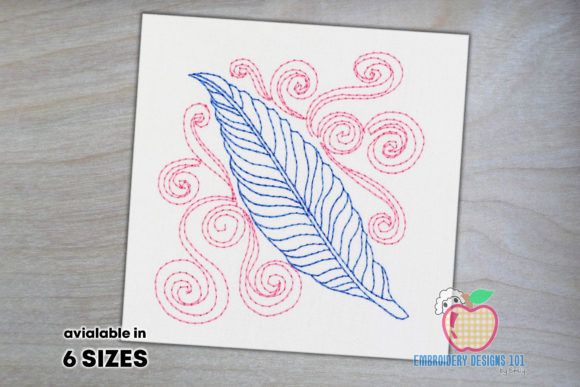
When Feather Pen Bean Stitch appeared on my screen—clean vector preview, no flashy animations—I paused. Not because it’s loud or dramatic, but because it *breathes*. It’s a single feather rendered in bean stitch, with subtle tapering, gentle curves, and a soft, organic rhythm. No florals, no script, no overwrought embellishment—just one elegant, hand-drawn-feeling motif that feels both vintage and current. It lands somewhere between scholarly charm and quiet artistry. That makes it unexpectedly versatile for Back To School projects, yes—but also for boutique baby embroidery, minimalist kitchen towels, or even wedding gift totes where subtlety reads as intention.
Real-World Test: Stitching It Onto a Linen-Cotton Tote Bag
Last week, I used Feather Pen Bean Stitch on a natural linen-cotton blend tote—intended for a local teacher boutique’s “First Day of School” collection. I chose a muted charcoal thread on off-white fabric, hooped with medium-weight tear-away stabilizer. The result? Crisp, dimensional, and surprisingly tactile—the bean stitch gave the feather a slight raised texture without bulk. Customers noticed it immediately—not as “embroidery,” but as *craft*. One teacher held the bag up and said, “It looks like someone drew this just for me.” That’s the power of restraint done right.
Where It Shines (and Where It Asks for Care)
- Custom apparel: Works beautifully on lightweight sweatshirts and structured tees—especially on chest or sleeve placements. Avoid high-stretch knits unless you add cut-away stabilizer underneath.
- Tote bags & tea towels: Ideal scale and density. The bean stitch holds up through repeated washing without fraying or flattening.
- Baby embroidery: Soft enough for onesies and burp cloths—but test first on bamboo jersey; the stitch density can shift on ultra-thin fabrics.
- Patches & aprons: Holds clean edges when trimmed and fused. Looks especially refined on denim or canvas aprons worn by small shop baristas or craft fair vendors.
- Caps & curved surfaces: Proceed with caution. The feather’s longest axis runs vertically—so center-front cap placement may distort the taper. Better suited for side-strap or rear-panel spots where curvature is gentler.
What It Does for Your Handmade Product—Beyond Aesthetics
Feather Pen Bean Stitch doesn’t shout. It *invites*. That changes how people engage with your finished product. On an Etsy listing, it elevates perceived value—not because it’s complex, but because it signals care in selection. Buyers scroll past generic fonts and clipart; they stop for something that feels chosen, not dropped in. For a craft business, that translates to higher conversion, better reviews (“so much more elegant than I expected”), and repeat customers who recognize your design voice.
It also strengthens brand consistency. If your shop leans into calm, thoughtful, or nature-adjacent themes—think herbal apothecaries, mindful educators, or slow-living home goods—this embroidery file becomes a quiet signature. Use it across pillow covers, baby blankets, and holiday embroidery (imagine it stitched in ivory on oatmeal wool for a new teacher’s Christmas gift), and customers begin to associate that delicate feather with your attention to detail.
Practical Notes Every Embroidery Designer Should Check
Before sending Feather Pen Bean Stitch to your machine—or listing it as part of a digital embroidery bundle—run through these quietly critical checks:
- Test on scrap fabric first, especially if using textured weaves (like bouclé or waffle-knit towels) — bean stitch can snag or skip on uneven surfaces.
- Review stitch density. While not overly dense, tight fill areas near the quill tip benefit from reduced underlay on lightweight fabrics.
- Confirm hoop size compatibility. It fits comfortably in a 4x4 hoop—but if you’re layering it with text or another motif, map spacing early.
- Inspect small details at actual stitch-out size. Zoom in on your software: does the finest taper still read clearly at 2.5" tall? Some machines soften subtle transitions.
- Try black-and-white mockups. Feather Pen Bean Stitch relies on line quality, not color contrast—so it must hold up in monochrome previews for your digital product listings.
- Compare light vs. dark fabric backgrounds. On navy or charcoal, opt for cream or ecru thread—not stark white—to preserve its softness.
- Use proper stabilizer. Medium tear-away works for stable wovens; switch to cut-away for knits or anything meant for daily wear.
- Verify licensing before selling finished items or digital embroidery files. Since Feather Pen Bean Stitch is marketed as a machine embroidery design, confirm whether commercial use is included—especially if you’re an Etsy seller bundling it with templates or printable mockups.
Final Thought: Less Is Anchored, Not Empty
Feather Pen Bean Stitch won’t dominate a garment. It won’t mimic realism or cram in detail for the sake of impressing. What it does—and does exceptionally well—is occupy space with purpose. It’s the kind of embroidery file that makes a personalized gift feel considered, a small shop product feel curated, and a custom apparel piece feel like it belongs to someone specific. In a market flooded with busy, over-digitized motifs, its quiet confidence is its strongest feature. Whether you're stitching for back-to-school readiness, nursery decor, or a handmade product line built on authenticity—it earns its place not by volume, but by resonance.