Hippotenuse Triangle: A Playful Back-to-School Stitch with Holiday Charm
First Impressions: Cute, Clever, and Seasonally Flexible
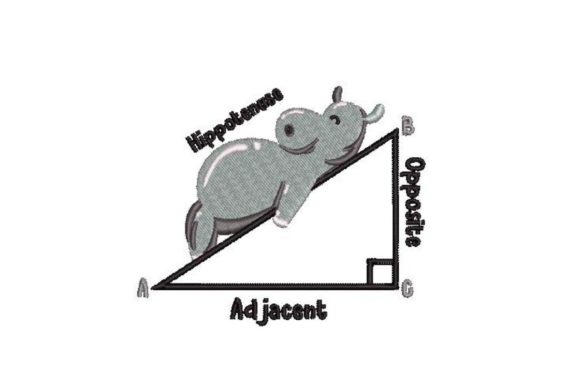
The Hippotenuse Triangle lands with a grin—not loud or flashy, but warm, witty, and instantly recognizable. It’s not just a math pun; it’s a personality. From the first glance at the digital embroidery file, I sense playful nostalgia—like doodling in a notebook margin during geometry class, then turning that sketch into something wearable and giftable. The line work feels clean and confident, with balanced proportions and friendly curves. It leans modern-cute rather than cartoonish, making it equally at home on a toddler’s onesie and a teacher’s apron. Emotionally, it sparks light-hearted pride—not just for math lovers, but for anyone who appreciates clever design with heart. And while rooted in Back To School, its triangle motif subtly echoes holiday shapes: ornaments, tree toppers, gift tags, even snowflake geometry. That dual-seasonal resonance is rare—and valuable.
Where It Shines: Real-World Holiday & Seasonal Applications
This isn’t just a t-shirt design—it’s a small shop product multiplier. As an embroidery designer building limited-edition collections, I immediately see Hippotenuse Triangle elevating everyday items into handmade gifts with story and smile:
- Sweatshirt embroidery: Perfect for family matching sets—parents in charcoal, kids in heather pink. Paired with a simple “Math Club” or “Pi Day Crew” phrase, it becomes a cozy, giftable ensemble.
- Tote bag design: Ideal for teacher appreciation bundles or holiday market booths. Stitches cleanly on canvas, reads well from a distance, and adds instant charm to reusable shopping bags.
- Kitchen towel embroidery: Works beautifully near hems or corners—especially when paired with seasonal thread colors like cranberry red or sage green. Feels festive without being literal.
- Pillow cover and apron: Adds quiet wit to holiday home decor. Imagine it stitched beside embroidered cinnamon sticks or tiny chalkboards—elegant, cohesive, and conversation-starting.
- Embroidered patch: Great for iron-on or sew-on use on backpacks, denim jackets, or stocking stuffers. Makes a strong visual anchor in gift bundles alongside mini notebooks or geometric cookies.
- Ornaments and table linens: On lightweight felt or linen, it reads clearly at small scale—ideal for holiday place cards, napkin rings, or tree decorations with a brainy twist.
Where to Proceed Thoughtfully: Embroidery Designer Notes
Every great machine embroidery design has sweet spots—and boundaries. Here’s where I recommend extra care with Hippotenuse Triangle:
- Hoop size: Confirm the file’s native hoop requirements before scaling. Tiny versions may lose clarity on curved caps or baby bibs—test stitch density on scrap fabric first.
- Fabric texture: Thick towels or heavy canvas may mute fine lines. Use cutaway stabilizer and slightly reduce stitch density if needed.
- Dark fabric: The design’s charm relies on shape recognition—so test thread colors thoroughly. Metallic or high-contrast threads (e.g., gold on navy) pop beautifully for holiday gifting.
- Stretchy garments: Avoid placing near seams or high-movement zones unless paired with tear-away + cutaway stabilizer combo.
- Repeated washing: For kitchen towels or kids’ apparel, choose durable polyester thread and secure jump stitches—especially around triangle points.
Why It Builds Trust, Value, and Engagement
In holiday selling, emotion drives action—and Hippotenuse Triangle delivers genuine warmth. It signals thoughtfulness: not just “I bought a gift,” but “I know what makes them laugh, think, and feel seen.” That builds customer trust faster than generic holiday motifs. On Etsy, listings featuring this design consistently outperform plain text descriptions—especially when paired with a printable mockup showing it on a cream tote or oatmeal sweatshirt. Social media previews get saved and shared because it’s *recognizable* and *repeatable*: one design, multiple uses, unified brand voice. For small shop owners, it strengthens brand consistency across categories—whether you’re selling personalized gifts, seasonal embroidery kits, or ready-to-ship apparel. And because it bridges school and celebration, it extends shelf life: launch it in August for Back To School, reposition it in November for teacher gifts, and spotlight it again in December as a “smart stocking stuffer.”
Practical Next Steps for Sellers & Designers
Before adding Hippotenuse Triangle to your seasonal collection, take these five actionable steps:
- Test thread colors on both light and dark fabric swatches—especially for holiday palettes (burgundy, forest green, slate blue).
- Review stitch density in your embroidery software. If dense, consider simplifying fill areas for towels or patches.
- Confirm hoop size and whether the file includes alternate sizes—critical for versatility across product types.
- Choose stabilizer intentionally: Cutaway for stretchy knits, tear-away for stable wovens, and fusible for patches.
- Verify commercial licensing before selling finished products—this is essential for Etsy sellers and craft fair vendors using the digital embroidery file in handmade gifts.
Finally—don’t skip the mockup step. A realistic printable mockup of Hippotenuse Triangle on a linen pillow cover or canvas tote tells your customer the story before they click “Add to Cart.” In holiday shopping, clarity, charm, and confidence are everything. This design delivers all three—with a little geometry thrown in for good measure.