Playground: A Thoughtful Embroidery Design for Small Business Branding
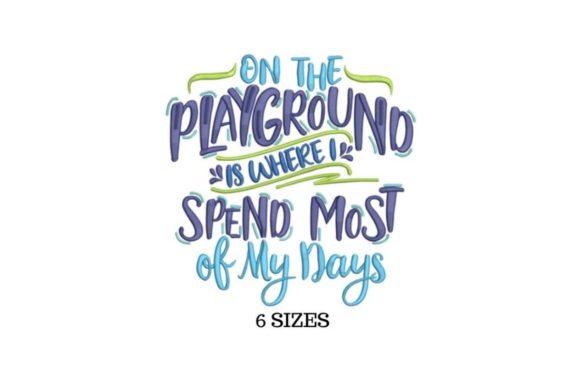
As an embroidery designer who’s developed hundreds of commercial designs for small businesses—from neighborhood bakeries to indie preschool studios—I approached Playground with a practical eye: not just “Does it look nice?” but “Will it strengthen my client’s brand, hold up in production, and resonate with real customers?” The product title and description—“This is a beautifully designed quote, perfect for preschool or elementary teachers, to be offered as a gift”—immediately signal its warmth and purpose. But for small business merch, that emotional appeal must translate into functional versatility. Here’s how Playground performs across the full spectrum of branded applications.
A First Impression That Builds Trust
Playground reads as friendly, intentional, and quietly confident—not overly cutesy or generic. It avoids cartoonish tropes while still feeling approachable, making it ideal for businesses that value authenticity over flash. Think: a local florist adding subtle charm to aprons, a handmade toy shop embroidering tote bags, or a boutique preschool launching staff uniforms. Its tone supports brand identity without shouting—it invites recognition through consistency, not volume. That’s critical when your logo appears on everything from coffee sleeves to embroidered patches on reusable lunch kits.
Where Playground Shines in Real Business Use
This machine embroidery design excels where many quote-based files falter: adaptability across fabric types and garment placements. As an embroidered patch, it holds crispness at 2.5"–3.5" sizes—ideal for sew-on branding on denim jackets, backpacks, or boutique merchandise tags. On staff apron embroidery, its balanced spacing and moderate line weight ensure legibility without stiffness. For cap embroidery, it works well on structured front panels (not curved bill seams), especially when paired with a clean sans-serif companion icon or monogram.
On tote bag design, Playground adds thoughtful distinction—neither too dominant nor too quiet—making it perfect for gift-ready packaging or local market haul bags. As a chest accent on custom apparel for a pet wellness studio or children’s bookshop, it communicates care and creativity without leaning into cliché. And because it’s rooted in the Back To School category, it also fits naturally on teacher appreciation gifts, classroom supply kits, or literacy-themed event merch—expanding its seasonal utility beyond August.
Smart Placement & Where to Proceed With Care
Like any strong digital embroidery file, Playground demands thoughtful execution—not just placement, but preparation. Avoid using it smaller than 2" wide on woven patches or curved surfaces like cap backs; fine details may blur or stitch poorly without proper underlay and stabilizer. On dark uniforms or textured fabric (like canvas aprons or linen tote bags), confirm thread color contrast—test in black and white first to assess readability before committing to final thread colors.
High stitch density can be a hidden challenge: if the quote includes delicate flourishes or tight kerning, verify that the design doesn’t over-stitch in small areas—this affects durability through repeated washing and impacts turnaround time in high-volume commercial embroidery. Always inspect spacing between words and letters; cramped layouts cause puckering on lightweight fabrics. And never skip the real-fabric test—what looks sharp on screen may shift on cotton poplin or organic jersey.
Strengthening Your Brand Identity—Beyond Decoration
For Etsy sellers and handmade brands, Playground isn’t just decoration—it’s a brand asset. When used consistently across aprons, tote bags, and packaging accents, it builds visual rhythm and reinforces professionalism. Customers notice when a bakery’s embroidered flour-sack towel matches their reusable produce bag; that cohesion signals intentionality and care. That perception lifts perceived product value—and encourages repeat purchases.
For service-based small businesses—a creative studio offering kids’ workshops, a mobile pet groomer, or a nature-based preschool—Playground helps humanize the brand. It’s warm enough to feel personal, refined enough to feel trustworthy. Unlike stock clipart or rushed vector imports, a well-executed embroidery file like this tells your audience: We invested in quality, and we value our story.
Practical Designer Notes Before You Stitch
Before adding Playground to your production queue or digital storefront, follow these field-tested steps:
- Test in black and white first—to evaluate contrast, balance, and negative space without color distraction.
- Check minimum viable size—run a 2" version on scrap fabric to confirm clarity and stitch integrity.
- Review thread color pairings—especially for light-on-dark or dark-on-light combinations common in custom apparel.
- Inspect letter spacing and outline weight—tight tracking or thin strokes may vanish on textured or stretchy materials.
- Confirm hoop size compatibility—some multi-format files include oversized versions that exceed standard 4x4 hoops.
- Use appropriate stabilizer—cutaway for knits, tear-away for stable wovens, and fusible for lightweight linens used in boutique merchandise.
- Create a printable mockup for client approval—showing Playground on actual garment types (e.g., unisex tee, canvas tote, structured cap) builds confidence pre-production.
- Compare it beside other design assets—does it harmonize with your existing logo, icons, or typography system?
- Verify commercial licensing—since this is positioned for small business merch, ensure the embroidery file permits resale use, not just personal projects.
Remember: a single embroidered patch or sleeve detail often becomes a customer’s first tactile impression of your brand. Playground delivers more than charm—it delivers coherence, craftsmanship, and quiet confidence. Used intentionally, it transforms everyday items into meaningful brand touchpoints. Whether you’re stitching for a sunlit café, a forest-school co-op, or a hand-poured candle studio, Playground earns its place in your design library—not as filler, but as foundation.